
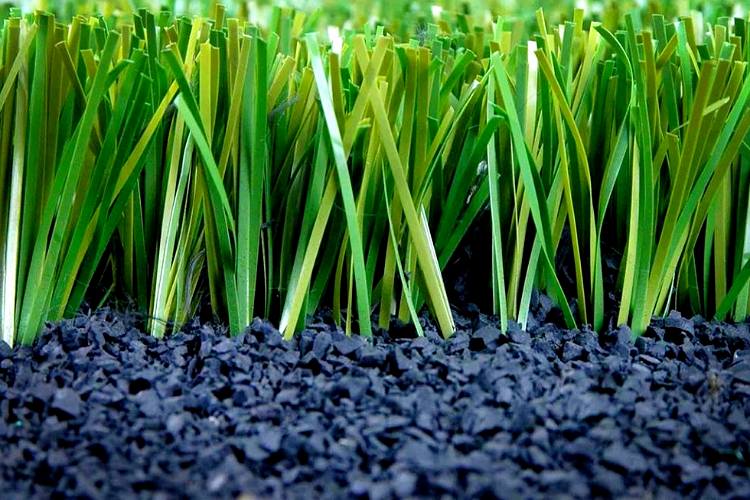
Most people who install artificial grass spend a long time thinking about the pile height, the colour, whether the blade shape looks convincing enough to fool someone walking past. What almost nobody thinks about is what goes between those blades once the lawn is laid. The infill. The stuff that’s completely invisible once the job is done, and yet the stuff that determines whether your lawn actually performs like a lawn or slowly turns into something that looks and feels like a slightly green doormat.
What Infill Actually Does
Infill is a granular material that gets brushed down into the fibres of an artificial grass installation after it’s been laid. It sits between the blades, weighs them down, keeps them upright, and gives the surface the kind of density and softness underfoot that makes synthetic turf feel like something worth walking on barefoot. Without it, the blades flatten quickly under foot traffic, the surface hardens off, and the whole installation starts looking tired within a season or two. The quantity matters as well. A shorter, denser product might need around one kilogram per square metre while a longer pile could need three or four times that, and getting it wrong in either direction causes problems that are annoying to fix after the fact.
Sand, Rubber and Why It Gets Complicated
Kiln-dried silica sand has been the go-to infill for decades and for a lot of straightforward domestic lawns it still does the job. It’s fine enough to settle deep into the pile, heavy enough to anchor the fibres, and it’s not expensive. The issue is that over time, particularly in areas that get a lot of use, it compacts and hardens, which is when people start noticing the surface losing the softness that made it appealing in the first place.
Crumb rubber had a long run of popularity, particularly on sports pitches, largely because of how well it absorbs impact. It’s made from recycled tyres, which sounds like a reasonable use of a waste material, and in that narrow sense it is. But it’s had a difficult few years. Research has raised concerns about the chemicals present in recycled tyre rubber and the potential for microparticles to move into surrounding soil and drainage systems. A lot of installers have quietly stepped back from recommending it for residential gardens, even if it remains common on professional playing surfaces where the performance case is harder to argue with.
The Options That Have Come Along Since
Cork infill has picked up a lot of ground recently and it’s not hard to see why. It’s a natural material, it doesn’t hold heat the way rubber does on a warm afternoon, it doesn’t compact the way sand does over time, and it has a natural antimicrobial quality that helps keep odours under control. That last point matters more than people expect, especially in gardens where dogs spend a lot of time. It costs more than sand but across most measures it performs better and it’s a genuinely more comfortable surface to sit on.
Zeolite is another material worth knowing about, though it tends to work best as a partial addition rather than a standalone solution. It’s a naturally occurring mineral with a porous structure that absorbs ammonia, which makes it useful blended into a sand base for gardens where pets are a regular presence. It won’t do the structural work on its own but it makes a noticeable difference to how fresh the lawn stays between cleans.
Why the Infill Conversation Is Worth Having Early
The choice of infill affects drainage, surface temperature, how the lawn feels underfoot, how quickly it degrades and how much maintenance it needs over its lifespan. Choosing the cheapest option at installation and then wondering why the surface feels hard and smells in summer a few years later is a pattern that comes up more often than it should. If you’re having artificial grass installed, ask about infill before the job starts. A good installer will have a clear answer. If they don’t, that also tells you something.

