
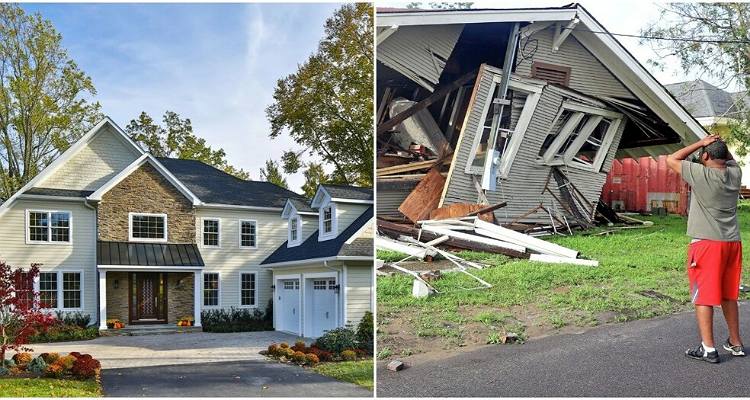
Most visitors to America observe a significant contrast in architecture with Europe or Asia. Whereas many countries’ residential landscapes are dominated by heavy masonry, America builds primarily in wood frame. Critics often dismiss these types as “cardboard” houses, but this building method is the gold standard for North American developers.
To understand what informs this choice, you have to look beyond aesthetics. It involves parsing a stew of local timber availability, specialised labour markets, and advanced engineering engineered specifically to endure the continent’s most capricious weather patterns, factors that also shape financing decisions, where institutions like LBC Mortgage take into account construction methods when evaluating long-term property value and risk.
Wood Frames Dominate
The abundance of forests found throughout the United States has led to a predisposition towards timber in American construction. Unlike parts of Europe, where centuries of settlement and development stripped old-growth forests down to trunks, the United States still has large swaths of managed forest set aside for the lumber industry.
Softwoods such as Douglas fir and southern yellow pine supply a reliable, high-quality source of “two-by-fours” that help keep material costs stable. This internal supply chain means builders seldom encounter the import tariffs or long-distance shipping costs attached to heavy stone or specialised brick.
Structural Flexibility Advantages
Wood is simply more flexible than rigid materials like brick or concrete. In a country that pretty much straddles all of the world’s seismic zones and contains all soil types, a house to which nothing is attached and which can “give” slightly without cracking is a big technical gain.
Paying off over time, engineers like the high strength-to-weight ratio of wood because it opens more creative avenues in architecture: Making open floor plans and vaulted ceilings requires much more invasive load-bearing masonry work, which proves costly. That versatility has made the wooden frame the template for the American suburban dream.
Cost Efficiency Strategies
Constructing with wood involves a different and often more universally applicable skill set than masonry. Framing crews can be very fast-moving on a site, employing standardized tools and techniques honed for decades.
For one, laying brick or pouring reinforced concrete is labor-intensive, a true artisan’s trade best left to highly specialised artisans who can charge much higher hourly rates in the American market. By selecting wood, the developers can spend money on contemporary internal finishes and energy-efficient systems rather than on the home’s raw skeleton.
Reduced Foundation Requirements
The heavier a building, the higher its foundations. A brick house is so massively heavy that it requires deep, reinforced concrete footings to prevent the structure from sinking or cracking due to its own weight. Wood-frame buildings are relatively light and put less stress on the ground. That lets builders use simpler types of foundations, saving thousands of dollars in excavation and concrete.
Speed Meets Demand
In the American property market, time is literally money. A wood-frame house can be dried, meaning the roof and walls go up, protected from rain, in a few weeks. It can take months for brick construction to get as far. This speed enables developers to quickly respond to housing shortages and market volatility.
And, for a family biding its time before moving into a specific site, a shorter construction window means fewer months spent locked into some dual mortgage/rent situation: the framework model is thus the most practical option when it comes to rapid urban expansion. Here are some actionable steps buyers and investors can take to capitalize on this race against the clock:
- Explore construction schedules: » Ask developers for overall prep sigs on project drafts, including expected ‘dry-in’ and final handover.
- Get financing in line early: Partner with lenders like LBC Mortgage to confirm pre-approval and make sure that funding arrives when the home hits key milestones.
- Plan your move strategically: Ideally, coordinate your lease expirations or current housing with the estimated completion date to minimise potential overlaps of housing costs.
- Monitor major milestones: Access the property at 3 key points—foundation, framing, and roofing—to ensure quality and correct issues as they arise.
These steps enable families and investors to efficiently save costs as they navigate fast-moving real estate markets without breaking a sweat.
Engineering Storm Resilience
Hurricanes destroy brick houses. This is a common misconception. But while heavy is dense, it’s also inflexible: when a hurricane changes the direction of air pressure, if a wall that needs to flex can’t—because its mortar joints break—then it destroys the entire rigid wall. Wood frames are designed as complete systems, with each stud, joist, and rafter interconnected.
The house performs as one single, slightly flexible structure during a storm. This “ductility” enables the building to absorb and dissipate energy from concentrated, high-pressure gusts rather than snapping under tension.
Advanced Fastening Technology
Building codes in hurricane-prone states such as Florida mandate specialised hardware referred to as hurricane straps. These galvanized steel connectors link the roof to the walls and the walls to the foundation, forming a continuous load path that keeps the roof in place when there are extreme pressure drops. A modern wood-frame house is predicated on several important engineered components working together:
- Hurricane straps and clips to secure structural connections
- Impact-rated windows designed to resist flying debris
- Reinforced garage doors that prevent internal pressure buildup
- Shear walls and bracing systems to stabilise the structure
Together, these features enable a modern wood-frame house to resist winds greater than 130 miles per hour. This so-called “cardboard” house is really a highly engineered survival cell.

