
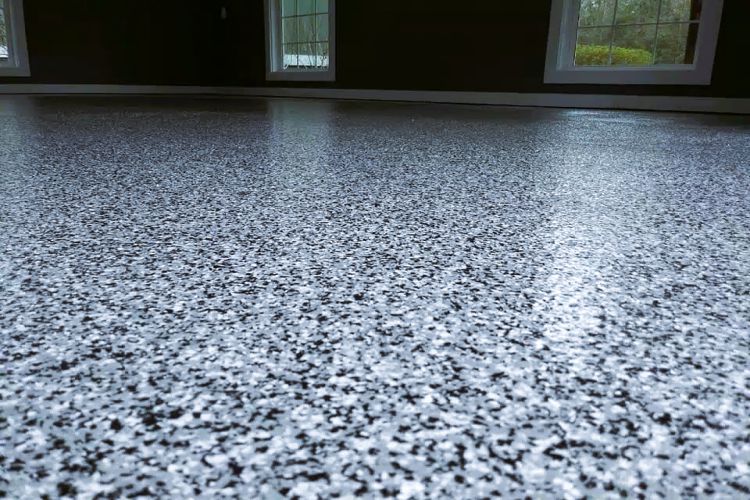
The vinyl or acrylic flakes scattered across most coated garage floors are usually presented as a visual choice. The brochure shows several color palettes. The homeowner picks the combination they like. The flakes get broadcast onto the wet base coat, sealed under a clear topcoat, and the floor looks great.
What the marketing materials rarely explain is that the flakes are doing several jobs at once, only one of which is decorative. The functional benefits of a flake system are real and substantial, and skipping the flakes to save cost or simplify the appearance often delivers a worse floor in measurable ways.
For anyone evaluating a durable concrete coating project, understanding what the flakes are actually contributing helps clarify whether they belong in your installation. They usually do. Here is why.
Slip Resistance That Smooth Coatings Cannot Match
A smooth concrete coating, even with a matte topcoat, becomes slippery when wet. Water, oil, snow tracked in on tires, and condensation from cold seasons all create slip hazards on smooth, coated surfaces. The visual appearance is sleek. The actual safety performance is poor.
Flakes change this fundamentally. When the broadcast flakes get partially exposed in the topcoat or create a textured surface even after full coverage, they produce a measurable increase in slip resistance. The coefficient of friction on a well-installed flake floor is significantly higher than on a smooth coated surface, especially when wet. For garage floors that occasionally see water from rain on vehicles, snow melt, or washing operations, this difference is the difference between a coating that is safe and one that is not.
This is not a small consideration. Slip-and-fall injuries on coated garage floors are a real source of insurance claims. Specifying a flake system is often the single most effective safety improvement in the entire coating decision.
Visual Camouflage That Hides Wear
Solid color coatings show every scuff, drip, and dent immediately. A scratch in a uniform gray floor is visible from across the garage. A drop of oil leaves a noticeable mark even after cleaning. The pristine appearance that looks great on installation day deteriorates visibly within months of normal use.
Flake systems hide all of this. The variation in color and texture from the flakes creates visual noise that absorbs minor damage into the overall appearance. A scratch that would be glaringly obvious on a solid color floor is essentially invisible against a flaked surface. Drops, drips, and minor staining blend into the background pattern rather than standing out against it.
Over the life of the floor, this means a flake system looks better longer than a solid color system. The actual durability is comparable. The perceived durability is much higher because the surface continues to look like new even when minor wear is happening.
Thicker Effective Film That Increases Resistance
A flake system involves more total material than a simple two-coat solid color system. The base coat goes down first. Flakes are broadcast into the wet base coat to saturation, meaning they cover the surface completely. Then a clear topcoat seals everything together. The result is a film that is meaningfully thicker than what a non-flake system delivers.
That additional thickness matters. Thicker films resist scuffing better, handle impact better, and absorb more wear before reaching the underlying concrete. The flakes themselves contribute structural reinforcement to the topcoat, similar to how aggregate reinforces concrete. The whole system is mechanically stronger than the equivalent thickness of solid coating without flakes.
For garage floors that will see significant traffic, dropped tools, vehicle parking, or other mechanical stress, the additional structural integrity that flakes provide translates into measurably longer service life.
Coverage of Surface Imperfections in the Concrete
Concrete slabs are never perfectly flat or perfectly smooth. Even well-prepared concrete shows some variation in texture, hairline cracks that have been repaired, color differences between sections, and other imperfections that were not visible before the coating went down.
Solid color coatings reveal all of these. A repaired crack remains visible as a slightly different color or texture beneath the uniform coating. A patch where a previous installation was removed shows through as a discolored area. The unforgiving uniformity of a solid color shows every flaw the concrete carries.
Flake systems forgive all of this. The visual complexity of the flakes obscures the variations in the underlying concrete completely. Repaired areas, color differences, and surface texture irregularities disappear into the broadcast pattern. According to industry data on the coatings market, decorative flake systems have become the dominant choice in residential concrete coating applications largely because of this combination of visual camouflage and functional performance benefits.
The Texture That Actually Cleans Better
A counterintuitive benefit of flake systems is that they often clean better than solid coatings. The textured surface allows dirt, dust, and debris to release more easily when the floor is hosed or mopped, compared to perfectly smooth surfaces where contaminants can adhere more tightly.
The exception is full-cover flake systems with deep texture, which can hold dust in the small valleys between flakes. For most residential installations, the topcoat is heavy enough that the texture is moderated to a level that maximizes slip resistance while still cleaning easily. The right balance is a question of how much flake is broadcast and how thick the clear topcoat is over it.
When to Skip the Flakes
Flake systems are not universally the right choice. Some installations specifically call for solid color coatings:
- High-end residential applications where the homeowner wants a polished concrete or solid metallic appearance for aesthetic reasons.
- Commercial showrooms or display spaces where a clean, uniform appearance supports the visual presentation.
- Floors that will receive coordinated decorative treatment, such as stenciling, logo work, or epoxy art.
- Industrial applications where the strict visual standards favor solid colors over decorative patterns.
For typical residential garage floors, however, the case for flakes is strong on functional grounds alone. The visual benefit is a bonus on top of the safety, durability, and forgiving appearance the flake system delivers.
The Bottom Line
Flakes in a concrete coating system are not just decorative. They contribute meaningfully to slip resistance, visual longevity, structural strength, and the floor’s ability to hide imperfections in the underlying concrete. Skipping them to simplify the appearance or reduce cost usually trades visible short-term savings for a less durable, less safe, and less attractive floor over time.
When a coating contractor recommends a flake system, the recommendation usually reflects accumulated experience rather than upselling. Understanding what the flakes actually do makes the conversation about the right system rather than the cheapest one.

