
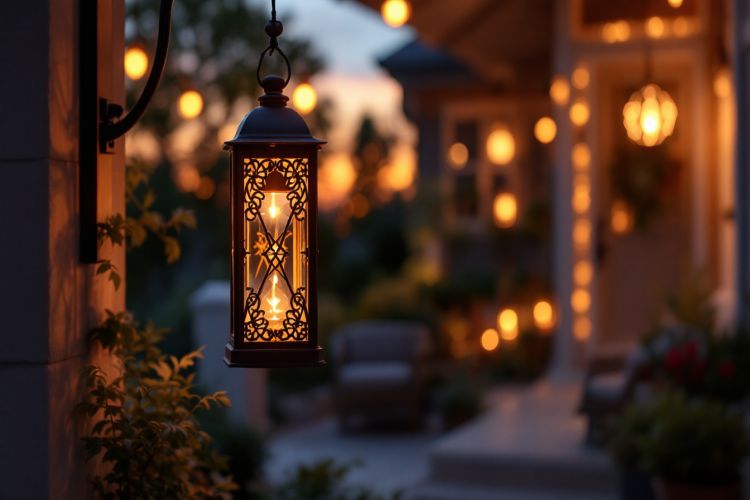
A ceiling fixture can change how a porch or covered patio feels after sunset. It provides practical light near doors and seating while occupying a highly visible position in the exterior design. Two popular descriptions outdoor hanging lights and outdoor hanging lanterns, often overlap, yet they do not always refer to the same look.
The simplest distinction is that “hanging lights” describes the broad installation type, while “hanging lanterns” usually refers to a recognizable enclosed or framed style. A lantern can be a hanging light, but not every hanging light is a lantern. Understanding that relationship makes it easier to compare fixtures by function, appearance, and location.
What Counts as an Outdoor Hanging Light?
Outdoor Hanging Lights include many fixtures suspended from an exterior ceiling by a chain, rod, cable, or cord. The category may contain streamlined pendants, glass globes, open metal frames, woven shades, compact chandeliers, and lantern-inspired designs. This variety gives homeowners more freedom to match contemporary, coastal, farmhouse, rustic, or eclectic architecture.
Because the term is broad, light patterns vary considerably. A clear globe may spread illumination in several directions, while a metal shade may focus it over a table. A woven design can create decorative shadows, and an open-frame pendant may keep a small porch from feeling crowded. The best shape depends on the task.
What Makes a Hanging Lantern Different?
Outdoor Hanging Lanterns usually feature a defined frame surrounding clear, seeded, frosted, or tinted panels. Many are inspired by traditional candle lanterns, although modern versions may use clean lines and minimal ornament. Their structure gives an entryway a strong focal point and works particularly well with symmetrical façades, covered porches, and transitional spaces.
A lantern is often chosen as much for its daytime appearance as for its nighttime performance. The frame remains visible when the fixture is off, helping reinforce black, bronze, brass, or other exterior hardware. Glass panels protect the bulb visually and can soften glare, but enclosed designs may require occasional cleaning to remove dust, pollen, and insects.
Choose According to the Porch Style
Lanterns are a natural fit for colonial, craftsman, farmhouse, and traditional homes because their framed silhouettes relate to established architectural details. They can also work on modern exteriors when the frame is simple and geometric. A more general hanging pendant may be better when you want a softer, sculptural, or less historically defined feature.
Check Height and Scale Before Buying
Hanging fixtures need sufficient clearance. Measure the ceiling height and consider where people will walk, stand, or move furniture. A pendant above an outdoor dining table can hang lower because no one passes directly beneath it. A fixture in an open circulation route must remain high enough to avoid becoming an obstacle.
Scale matters too. A tiny lantern may disappear beneath a broad roof, while an oversized pendant can crowd a narrow entrance. Use the door, table, or seating group as a visual reference. Check the fixture’s body height as well as its chain or rod length, since both affect the final drop.
Make Sure the Fixture Suits the Location
An indoor pendant should not be installed outside simply because the area has a roof. Covered porches still experience humidity, wind-driven rain, condensation, temperature changes, and dust. Select a fixture identified for the intended outdoor location and follow its instructions. A sheltered ceiling differs from a pergola or partially open gazebo.
Wind also influences the choice. Long chains and lightweight shades can sway in exposed areas. If the porch is breezy, consider a shorter suspension, a solid downrod, or a heavier compact fixture. Verify that the ceiling box and mounting hardware can support the fixture, and have hardwired electrical work completed according to local requirements.
Think About Light Quality and Maintenance
For a welcoming porch, warm or soft white light usually feels more comfortable than very cool light. Clear glass displays the bulb, so choose a shape that complements the design and avoid unnecessarily harsh output. Frosted panels reduce glare, while downward-facing shades place more light on tables or walking surfaces. A dimmer can make a covered patio more flexible.
Maintenance should be realistic for the installation height. Open fixtures are often easier to wipe, but the bulb may be more exposed to dust. Lantern panels need cleaning on both sides to stay clear. Before purchasing, check how the shade opens, how the bulb is replaced, and whether decorative parts can be reached without dismantling the entire fixture.
Which Option Is Better?
Choose a hanging lantern when you want a defined architectural accent, an enclosed framed appearance, or a classic welcome at the front door. Choose from the wider hanging-light category when you prefer more freedom in shape, material, and light direction. In both cases, correct scale, outdoor suitability, comfortable brightness, and safe clearance matter more than the label.
The right fixture should look intentional during the day and make the porch easier to use at night. Measure first, consider weather exposure, and view the light as part of the exterior rather than an isolated decoration. With those basics settled, either style can create an inviting transition between indoors and outdoors.

