Small bathrooms are one of the most common remodeling challenges homeowners face. The typical guest bath or secondary bathroom runs 40-50 square feet, which leaves very little room for error in design and layout. But limited space doesn’t have to mean limited results. Some of the most striking bathroom transformations happen in the smallest rooms.
The key is making strategic choices about where to spend and where to save. Here are the approaches that deliver the biggest visual and functional impact without pushing into luxury-tier budgets.
Maximize Visual Space With the Right Tile Strategy
Tile selection has more influence on how a small bathroom feels than almost any other single decision. The right tile makes a 5×8 room feel open and intentional. The wrong tile makes it feel cramped and busy.
Large-format tiles (12×24 or larger) work surprisingly well in small bathrooms. Fewer grout lines create a cleaner visual plane that tricks the eye into perceiving more space. Running the same tile from floor to ceiling in the shower area amplifies this effect – the continuous surface eliminates visual breaks that make the room feel chopped up.
Light-colored tile with a slight texture is the safest bet for small bathrooms. Pure white can feel sterile, but a warm white, soft gray, or light greige reads as clean and spacious. Save bold accent tiles for a single feature – a shower niche, a border strip, or the floor of the shower pan – rather than covering entire walls with pattern.
Penny tile and hexagonal mosaic patterns work well on shower floors where slip resistance matters. They add visual interest at your feet without overwhelming the room’s overall proportions.
Rethink the Vanity
The vanity is usually the largest piece of furniture in a small bathroom, so it dominates the room’s character. Swapping a bulky builder-grade vanity for something slimmer and more intentional makes an immediate difference.
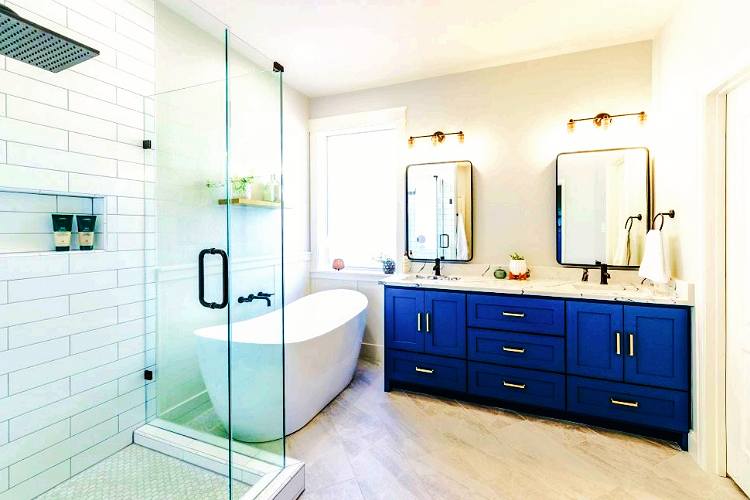
Floating vanities (wall-mounted, with open space below) make small bathrooms feel larger because you can see the floor extending beneath them. A 30-inch or 36-inch floating vanity with a single-piece quartz or integrated sink top looks modern and frees up visual space that a cabinet-to-floor vanity occupies.
If counter space is tight, consider a vessel sink or a semi-recessed basin. These options allow for a narrower vanity depth (16-18 inches instead of the standard 21) while still providing usable basin size. The trade-off is storage volume, but in a bathroom with a separate linen closet or wall-mounted medicine cabinet, vanity storage matters less.
For the countertop, a solid white quartz or a single-piece cultured marble top with integrated sink costs $200-400 for a 36-inch vanity and eliminates the seam between sink and counter where grime collects.
Upgrade Fixtures Without Moving Plumbing
This is where small bathroom remodels save the most money. Moving plumbing – relocating the toilet, shower, or vanity to new positions – is the single most expensive change in any bathroom renovation. If the current layout is functional, keep the plumbing where it is and invest in better fixtures at each existing location.
Replace the faucet with a single-handle or touchless model in matte black, brushed nickel, or brushed gold. These finishes have replaced polished chrome as the default in updated bathrooms, and a quality faucet runs $80-250.
Swap the showerhead for a rain-style overhead unit or a handheld combo on a slide bar. A rain showerhead completely changes the shower experience and costs $50-200 for a solid model. If the existing shower valve is old enough that temperature control is inconsistent, replacing the valve cartridge or the entire valve assembly is worth the plumber’s fee.
Replace the toilet if it predates 2000. Modern low-flow toilets (1.28 gallons per flush) work dramatically better than early low-flow models from the 1990s and save roughly 13,000 gallons per year compared to older 3.5-gallon fixtures. A quality elongated-bowl toilet costs $200-400 and installs in under two hours.
Lighting and Mirrors Make the Room
Small bathrooms are often under-lit, which makes them feel even smaller. Improving the lighting is one of the cheapest upgrades with one of the biggest impacts.
Replace a single overhead fixture with a combination of vanity-level sconces (one on each side of the mirror) and a recessed ceiling light. Side-mounted sconces eliminate the shadows that a single overhead fixture casts on your face, and they look far more polished.
The mirror itself is the largest reflective surface in the room, and upgrading it costs relatively little. A frameless, edge-polished mirror that extends from the vanity backsplash up to or near the ceiling makes the room feel significantly taller. If you prefer a framed mirror, choose a thin frame in a finish that matches your fixtures.
For more ideas on optimizing small bathroom layouts and material selections, click here to explore detailed project galleries and cost breakdowns.
Smart Storage in Tight Spaces
Storage in a small bathroom requires creativity because floor space is at a premium. The best solutions use vertical space and dead zones that typically go to waste.
A recessed medicine cabinet built into the wall between studs provides 3-4 inches of shelf depth without projecting into the room. This is a meaningful upgrade over a surface-mounted cabinet or a flat mirror. Modern recessed cabinets come in attractive sizes with soft-close doors and adjustable glass shelves.
Over-toilet shelving or a slim cabinet positioned above the tank uses vertical space that’s otherwise completely wasted. A well-chosen unit in a finish that matches the vanity looks built-in rather than aftermarket.
Shower niches (recessed shelves built into the shower wall during tile installation) eliminate the need for hanging caddies and corner shelves. A single 12×24 niche holds shampoo, soap, and a razor without cluttering the shower. Building them during a remodel costs very little in additional labor and materials.
Budgeting the Smart Way
A focused small bathroom remodel that keeps plumbing in place, updates all visible surfaces, and upgrades fixtures can be completed for $8,000-15,000 depending on material selections and local labor rates. That number jumps significantly if you move plumbing or expand the room’s footprint.
Prioritize the changes you’ll notice most: tile (floor and shower), vanity, fixtures, lighting, and mirror. Paint is the cheapest way to change the room’s entire character and should be done last after all construction dust settles. Use a mildew-resistant bathroom paint in a satin or semi-gloss finish for durability.
The best small bathroom remodels don’t try to make the room something it isn’t. They work with the space available and make every square foot count.