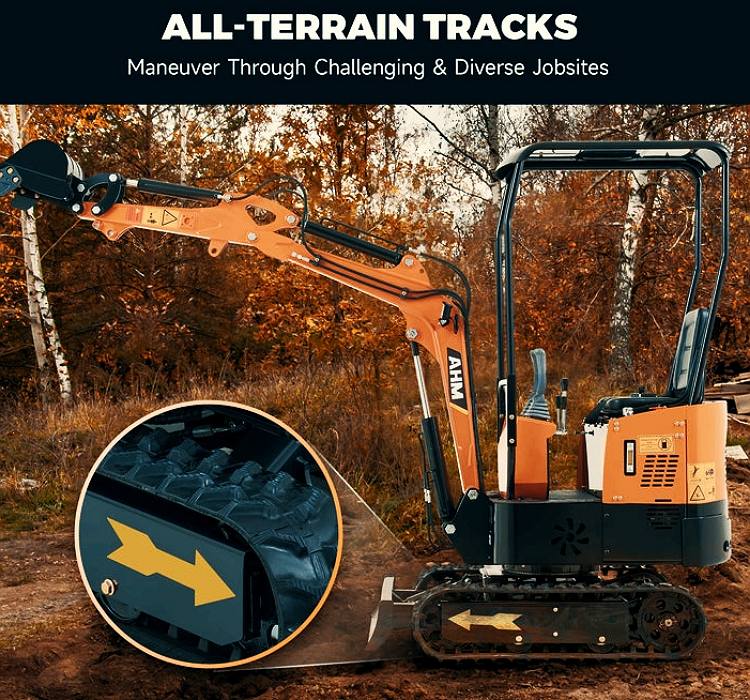
If you’ve been shopping for a mini excavator, you’ve probably spent a lot of time staring at spec sheets. You see numbers for “Max Dig Depth,” “Bucket Breakout Force,” and “Operating Weight.”
But what do those numbers actually mean when you’re sitting in the cab of an AHM AX-12 trying to pull a stubborn oak stump?
At AHM, we want you to buy with confidence. Let’s decode the three most important specs on any mini excavator sheet so you know exactly what your machine can handle.
1. Max Dig Depth: How Deep Can You Go?
This is the most straightforward spec, but it’s often misunderstood.
- The Definition: This is the maximum vertical depth the bucket can reach when the boom and arm are fully extended downward.
- Why it Matters: If you are installing a septic tank or a deep utility line, you need to know your limit. However, remember that you rarely want to dig at “Max Depth” all day. It’s harder to see your work and harder to lift heavy loads from that far down.
- The AHM Standard: Our AX-12 offers a depth of roughly 5.5 to 6 feet, which is the “sweet spot” for 90% of residential projects like footings, trenching, and landscaping.
 2. Breakout Force: The “Muscle” of the Machine
This is arguably the most important number for performance, yet it’s the one most people skip.
- The Definition: Breakout force is the maximum amount of power the machine can apply at the tip of the bucket. Think of it as the “curling power” of the bucket or the “prying power” of the arm.
- Why it Matters: Have you ever tried to pull a rock out of hard-packed clay? If your breakout force is too low, the bucket will just stall against the dirt. A high breakout force means you can “snap” through roots and pry up heavy stones without the machine straining.
- The AHM Edge: We engineer our hydraulic systems to provide high breakout force relative to the machine’s size, ensuring that even our 1-ton models punch well above their weight class.
3. Operating Weight: Stability vs. Portability
When you see a machine labeled as a “1-ton” or “1.5-ton,” you’re looking at its operating weight.
- The Definition: This is the total weight of the machine, including a standard bucket, a full tank of fuel, and a standard-sized operator.
- Why it Matters:
- Towing: You need to know if your current truck and trailer can legally haul the machine.
- Ground Pressure: A heavier machine has more “counterweight,” meaning it can lift heavier loads without tipping. However, a lighter machine (like the AX-12) is easier to move and won’t tear up your grass as much.
The Pro Tip: If you’re working on a slope, a slightly heavier operating weight provides a lower center of gravity and better stability.
Quick Specs Reference Table
| Spec | What it Tells You | Practical Example |
|---|---|---|
| Dig Depth | How deep the hole can be. | Can I reach the frost line for these footings? |
| Breakout Force | How much prying power you have. | Can I rip this stump out of the ground? |
| Operating Weight | Total weight & stability. | Can I tow this with my 1/2 ton pickup? |
| Swing Angle | How far the cab rotates. | Can I dump the dirt behind me (360°) or only to the side? |
Don’t Just Buy the Biggest Number
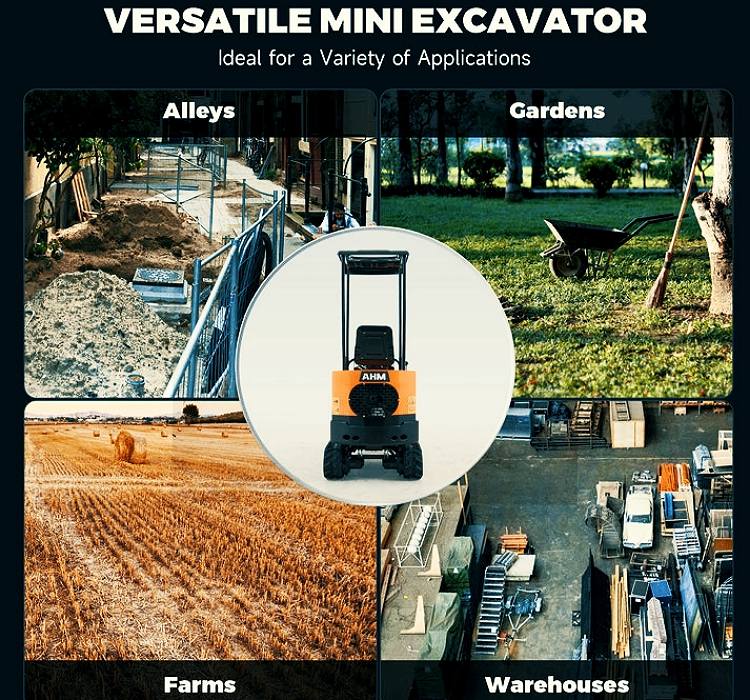
The “best” specs aren’t always the biggest ones. The best specs are the ones that match your property. If you have tight gates and soft soil, an AX-12 with a 6-foot dig depth is much better than a 10-ton monster that won’t fit in your yard.
Still confused about which AHM model fits your needs? Reach out to our team—we love talking shop and helping you find the perfect match for your dirt.