
Furniture presentation has evolved significantly in recent years. Today’s buyers are not just looking for a chair, sofa, or bed. They want to imagine how that piece will live inside their home. They want to understand scale, mood, texture, and styling before making a purchase.
For furniture brands and interior teams, this creates an interesting challenge. A product might come in several fabrics, finishes, and sizes, but photographing every variation inside a styled room can quickly become expensive and time-consuming.
That is why many brands rely on lifestyle rendering services to visualize furniture in realistic interiors before every variation is physically staged or photographed. These visuals allow teams to present products in complete room environments, helping buyers see how furniture fits into real living spaces.
Instead of relying only on plain product images, brands can create rich visual stories that communicate design intent, comfort, and scale.
Why Isolated Product Shots Do Not Always Answer Design Questions
Traditional product photography still plays an important role in furniture marketing. Clean product images on neutral backgrounds are ideal for product detail pages, technical specifications, and catalog listings.
However, these images often fail to answer some of the most common questions buyers have when shopping for furniture online.
For example, customers frequently wonder:
- Will this sofa look too large in my living room?
- Does the fabric feel warm or cool in tone?
- How does the wood finish interact with natural light?
- What interior style pairs best with this design?
Without room context, it is difficult for buyers to imagine these answers. A sofa floating on a white background does not reveal how it feels inside a complete interior.
Room scenes solve this problem by placing furniture inside a realistic environment. Buyers can instantly see how the product interacts with walls, rugs, lighting, and decorative elements.
This visual context helps reduce uncertainty and improves purchasing confidence.
What Room-Scene Visuals Communicate Better Than Standard Packshots
Room-scene visuals do much more than simply decorate a product presentation. They help communicate several critical design details that packshots cannot easily show.
Room Context
Furniture exists within an environment. A styled interior scene helps buyers understand how the piece fits among other elements such as:
- coffee tables
- rugs
- lamps
- artwork
- shelving units
Seeing furniture in context makes the product feel more realistic and relatable.
Interior inspiration platforms like the home interior inspiration section often demonstrate how furniture pieces interact with complete room designs. This kind of visual storytelling helps buyers imagine similar environments in their own homes.
Scale Clarity
One of the biggest concerns in online furniture shopping is scale.
A sofa might appear compact in a cropped image but feel oversized in a small apartment. When placed inside a full room layout, customers immediately understand its proportions.
This simple visual cue helps prevent purchasing mistakes.
Mood and Finish
Materials such as wood, linen, leather, and velvet respond differently to lighting and surrounding colors.
A room scene helps buyers interpret whether a piece feels:
- warm and cozy
- light and minimal
- bold and contemporary
- relaxed and casual
The surrounding décor supports this interpretation.
Consistency Across Channels
Well-designed room visuals can be reused across many marketing channels, including:
- ecommerce product pages
- print catalogues
- social media campaigns
- digital advertisements
- launch presentations
A single visual system can support the entire marketing ecosystem.
How Styled Visuals Support Ecommerce, Catalogues, and Collection Launches
Furniture brands often launch collections with multiple design variations.
For example, a single sofa model may include:
- six upholstery fabrics
- two leg finishes
- several configuration sizes
Photographing each version inside a styled room would require many separate photoshoots.
Instead, styled visuals allow teams to build flexible interior environments where materials and finishes can be updated efficiently.
These visuals help brands:
- introduce new collections faster
- maintain consistent styling across products
- test different color combinations
- reduce studio and staging costs
Design storytelling also becomes easier when room scenes are used across editorial content and interior guides such as decorate your home ideas. These types of design-focused resources show how furniture pieces contribute to a cohesive interior style.
What Teams Need Before Creating Room-Scene Visuals
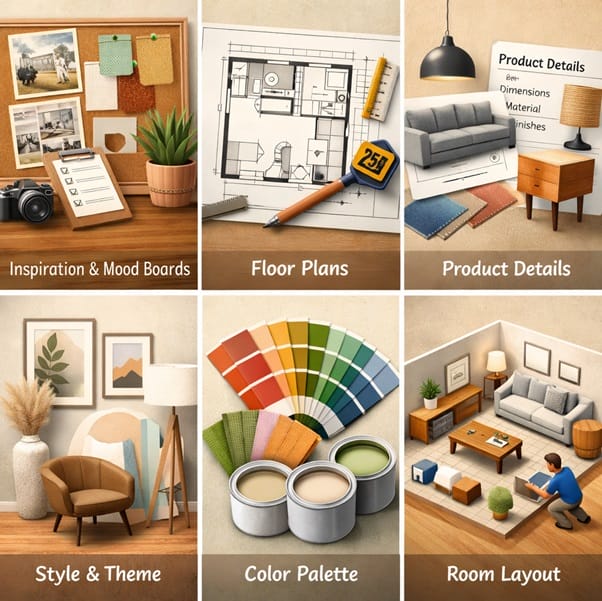
Before designers begin creating room visuals, several key pieces of information must be prepared.
This ensures that the final visuals remain accurate and realistic.
Dimensions
Precise measurements are critical. Every piece must be scaled correctly within the room.
Incorrect proportions can immediately break visual credibility.
Material References
Textures and finishes must be documented carefully. Teams usually gather references for:
- upholstery fabrics
- wood grains
- metal finishes
- stone surfaces
- glass details
Accurate references help ensure that materials appear realistic in lighting.
Finish Options
Many furniture collections offer multiple finishes or color variations.
Knowing these options early allows designers to create scenes that can support multiple versions of the same product.
Style Direction
Each furniture brand has a distinct aesthetic language. The interior environment should reflect this identity.
For example, a Scandinavian-inspired brand might prefer minimal rooms with natural wood and soft lighting.
Target Room Mood
The final step is defining emotional tone.
A room could feel:
- calm and neutral
- dramatic and modern
- warm and welcoming
- layered and cozy
Establishing this mood guides every styling decision.
Furniture Room-Scene Planning Checklist
Before creating styled furniture visuals, many teams follow a planning checklist to ensure consistency.
Furniture Room-Scene Planning Checklist
- Confirm product dimensions and proportions
- Prepare CAD models or product drawings if available
- Collect accurate material references
- List all finish and upholstery options
- Define the overall interior style direction
- Choose lighting conditions for the scene
- Select complementary décor items
- Ensure the furniture remains the focal point
- Align visuals with ecommerce and marketing needs
- Confirm camera angles suitable for reuse
This preparation stage allows teams to avoid costly revisions later in the process.
Mini Example: One Sofa Collection, Three Room Moods, Six Upholstery Options
Imagine a furniture brand launching a contemporary sofa collection with six upholstery options.
Instead of building six different physical sets, the brand creates three styled interior environments that represent different moods.
Mood One: Calm Minimal Living Room
This interior uses soft neutrals, light oak flooring, and gentle daylight.
It works perfectly for:
- beige upholstery
- cream fabrics
- warm sand tones
Mood Two: Urban Contemporary Lounge
This space features darker walls, modern artwork, and metallic accents.
It highlights:
- charcoal fabric
- slate gray upholstery
Mood Three: Relaxed Family Living Room
This room includes layered rugs, plants, and casual styling.
It suits:
- textured linen fabrics
- warm casual colors
What Can Be Reused
Several design elements remain consistent across all scenes:
- the sofa model and dimensions
- camera angles
- lighting direction
- styling proportions
What Changes
To show different variations, teams update:
- upholstery materials
- decorative cushions
- wall art
- accent furniture
How This Reduces Staging Effort
By reusing environments and adjusting materials digitally, brands dramatically reduce the effort required for multiple photoshoots.
This method also speeds up product launches.
Common Mistakes in Furniture Presentation Visuals
Even well-designed scenes can lose effectiveness if certain mistakes occur.
Unrealistic Scale
Furniture must match the dimensions of the room environment.
Oversized objects or incorrect proportions quickly look unnatural.
Overdecorated Scenes
Too many accessories can distract from the furniture itself.
The product should remain the visual centerpiece.
Inconsistent Lighting
Lighting should remain consistent across product variations.
Changing shadows or brightness levels can confuse buyers.
Materials That Look Inaccurate
Textures and finishes must appear realistic. Poor material representation can make fabrics or wood look artificial.
Weak Connection Between Product and Room Style
The interior design style should support the furniture piece.
A mismatch between room décor and product design can weaken the visual narrative.
Building a Reusable Lifestyle Visual System for Furniture Marketing
As furniture brands expand their collections, they often develop a reusable visual system for product presentation.
Instead of creating every scene from scratch, teams design flexible environments that can accommodate multiple products and variations.
Using lifestyle rendering services, brands can produce scalable visuals that maintain consistency across ecommerce platforms, catalogs, and social media campaigns.
These visuals also support editorial storytelling about brand philosophy and design identity. Many companies use informational pages like about the brand and design approach to explain how their interiors and products reflect a specific lifestyle.
Real-world design inspiration also helps buyers connect furniture to broader interior trends. Articles such as how Aspen interior designers are redefining mountain luxury living demonstrate how furniture can shape the character of an entire space.
When brands combine reusable interior scenes with thoughtful design storytelling, they create a presentation system that helps customers visualize products with clarity and confidence.
FAQs
When should a brand use room scenes instead of isolated product images?
Room scenes are ideal when buyers need to understand scale, styling, and atmosphere. Isolated product images remain important for technical clarity and specifications.
How many lifestyle scenes are enough for a launch?
Most furniture collections benefit from two to four styled interiors. This provides visual variety while maintaining a cohesive presentation.
Can the same renders be reused for social media and PDPs?
Yes. Lifestyle visuals are extremely versatile and can be adapted for product pages, advertising campaigns, catalogs, and social media posts.
How do teams keep materials and colours realistic?
Accurate material references, calibrated lighting, and detailed texture mapping ensure that fabrics, wood grains, and finishes appear realistic.
Do you need CAD files to start?
CAD files are helpful but not always required. Product drawings, measurements, and high-quality material references can also support the creation of accurate interior visuals.